By
24 min ago 2 min read
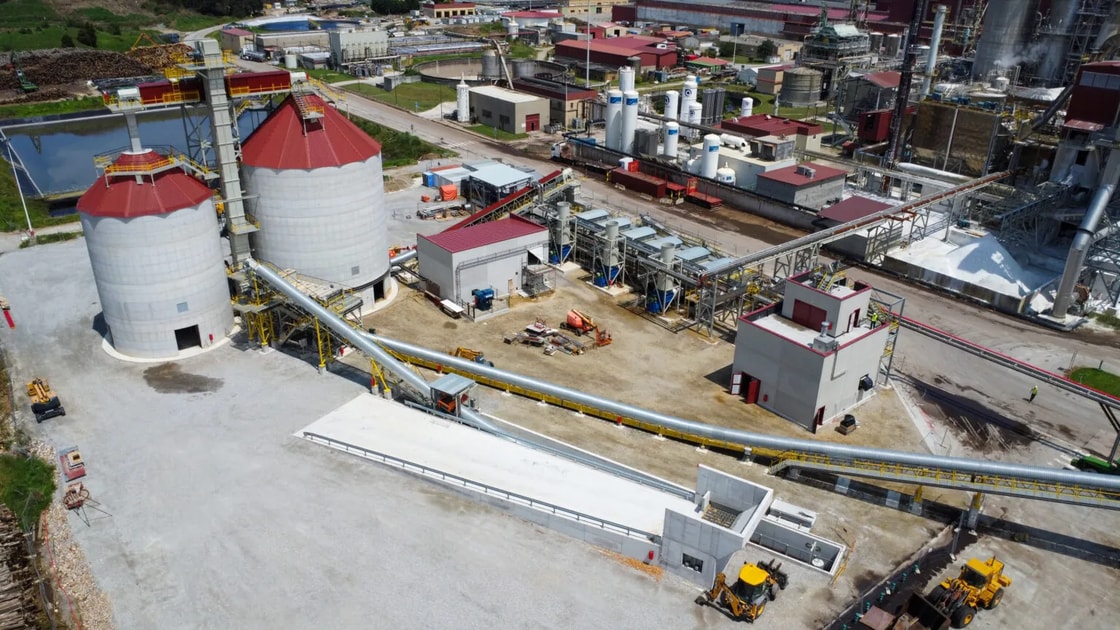
Spanish bioenergy company Ence has inaugurated €200m ($223.9m) in projects to reduce its annual carbon dioxide (CO2) emissions by 40,000 tonnes at its Navia bioplant in Asturias, Spain.
Under a dedicated €48m ($53.7m), it aims to replace fossil fuels in its lime kilns with biomass for biofuel and install multi-fuel burners, in addition to inaugurating a new wood processing line.
For this, a total of €13m ($14.55m) has been financed through the energy efficiency programme of Spain’s Institute for Energy Diversification and Saving.
A further €160m ($179m) has been allocated to expand and improve the Navia bioplant’s production processes, and to develop a fluff pulp line to supply absorbent product markets.
The new wood processing line can process 5,400m³ of wood each day, increasing the availability of bark for use as biofuel in the biomass boiler and supporting its on-site circular economy model.
Biofuel, derived from organic matter, is inherently carbon neutral, capturing CO2 during the organism’s lifetime.
The Navia bioplant is Ence’s highest production capacity plant, producing 685,000 tonnes of high-quality eucalyptus elemental chlorine free (ECF) pulp to primarily support the European paper industry.
In October 2024, the company targeted biomethane production of , working with Spain’s agricultural biomass, livestock and the agri-food industry.
According to the International Energy Agency, Spain’s industrial CO2 emissions primarily come from burning fossil fuels to produce heat for industrial processes such as making paper or steel.
More widely, in May of this year, industrial gas major Linde with Valmet to offer electrically driven carbon capture solutions for the pulp and paper industry.