Experts at a high-level roundtable emphasized the crucial role of Mini/Micro Hydropower Plants (MHPPs) in Pakistan’s transition to clean energy. They stressed the urgent need for clear policies, innovative financing, and strong institutional support to ensure the long-term sustainability and investment in renewable energy. The experts also urged the government to incorporate microgrids into the country’s Nationally Determined Contributions (NDCs) to attract climate finance.
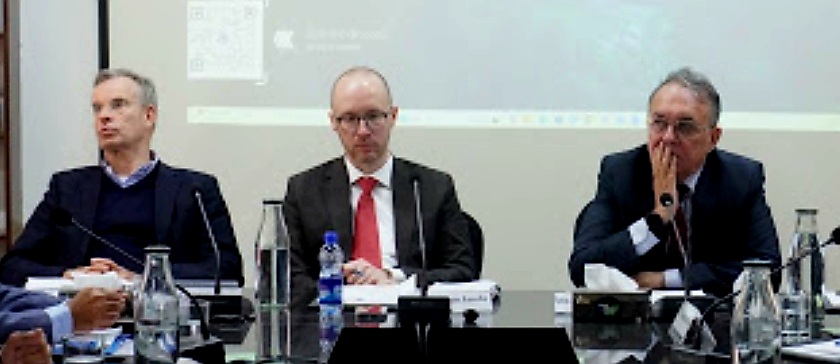
The roundtable, titled “Scaling the Potential of Mini/Micro Hydropower Plants (MHPPs) in Khyber Pakhtunkhwa & Gilgit-Baltistan: Opportunities and Instruments,” was organized by the Sustainable Development Policy Institute (SDPI) in collaboration with the Pakistan-German Energy and Climate Partnership (PGCEP). Sebastian Jacobi, Director of KfW, reaffirmed Germany’s commitment to supporting Pakistan’s clean energy transition. He stated that €200 million has been allocated for hydropower initiatives in Khyber Pakhtunkhwa (KP) and Gilgit-Baltistan (GB) to improve the region’s energy infrastructure.
Dr. Abid Qaiyum Suleri, Executive Director of SDPI, highlighted the cost-effectiveness of MHPPs in providing renewable energy to underserved communities. He called for stronger provincial policies, public-private partnerships (PPPs), concessional financing, and access to climate funds. He also pointed out the potential of carbon markets in ensuring financial sustainability through the sale of carbon credits. Dr. Sebastian Paust, Head of Development Cooperation at the German Embassy, identified key challenges in implementing MHPPs, including security concerns, financial sustainability, power theft, and line losses. He emphasized that capacity building at the municipal and community levels is essential for the long-term success of these projects.
Aftab Ahmad Shah, Technical Expert at KfW, outlined major obstacles in micro and medium hydropower projects, such as inadequate maintenance budgets, lack of skilled technical staff, and inefficient outsourcing models. He called for standardized, climate-resilient project designs, improved tariff mechanisms, regulatory reforms, and innovative financing models to attract private sector investment. Dr. Zeeshan from the University of Engineering and Technology, Peshawar, stressed the importance of regular monitoring, predictive sensors, and flood early warning systems to extend the lifespan and efficiency of MHPPs. He explained how digitized monitoring and anomaly detection can enhance load management and reduce inefficiencies.
Masood ul Mulk, Chief Executive Officer of the Sarhad Rural Support Program (SRSP), emphasized the need for community engagement strategies tailored to local needs. He noted that MHPPs generate up to 2 MW of affordable electricity, with domestic rates at PKR 5 per unit and commercial rates at PKR 8 per unit, saving communities an estimated PKR 168 million over five years compared to the national grid. Sherzad Ali, Coordinator at the Aga Khan Development Network (GBC), shared insights on the growth of over 180 operational micro-hydro units that serve both domestic and commercial needs. He highlighted how these projects have evolved into community-led models with strong local capacity-building efforts.
A socioeconomic analysis presented at the roundtable showed that MHPPs have an internal rate of return (IRR) exceeding 30% and a payback period of two to three years, making them highly attractive for private sector investment. Dr. Irfan Yousuf, a consultant for UNDP and the World Bank, called for stronger institutional coordination and policy support for microgrid development. He noted that high costs and limited financial viability make microgrids difficult to access for consumers and suggested hybrid battery solutions, especially during winter, to improve reliability. He also emphasized the need for Pakistan to integrate microgrids into its NDCs to attract climate finance, learning from successful models in the region.
Arshad Rashid, Chief of Programs at the Pakistan Poverty Alleviation Fund, stressed the importance of bankable feasibility studies, risk assessments, and economic modeling to draw private investment. He acknowledged the availability of financing from development finance institutions and commercial banks but warned that security risks, high capital costs, and structural constraints remain significant barriers for private investors. Safdar Hayat, Deputy Director of Renewable Energy at the Pakhtunkhwa Energy Development Organization (PEDO), discussed ongoing efforts to integrate solar PV hybrid models into MHPPs to enhance scalability. He highlighted PEDO’s 6.95 MW hydro project supporting small industries and its portfolio of 13 operational mini/micro hydro projects across KP.
Shahzad ul Hasan, Manager Finance at Acumen Fund, called for tax exemptions and investment-friendly policies to encourage private sector participation in renewable energy. He advocated for blended financing structures, government-backed guarantees, and long-term return horizons of 10 to 15 years to ensure financial sustainability. Umar Pervez, Deputy Director of Renewable Energy at PEDO, emphasized the role of performance-based incentives in attracting communities, private investors, and international donors.
Sadia Satti, Gender Climate Expert at SDPI, highlighted the need for greater gender inclusion in energy policies. She pointed out the lack of female representation in decision-making processes and advocated for gender-responsive climate finance, gender bonds, and policy frameworks to ensure women’s participation in Pakistan’s energy transition. Asad Mehmood, Technical Advisor for Adaptation, stressed the importance of localized technical support and institutional frameworks to enhance the long-term viability of MHPPs. The session concluded with recommendations for tailored policy interventions, stronger community engagement, and robust financial support to drive sustainable energy solutions in Pakistan.