Permission granted for Kozloduy sanctions derogation

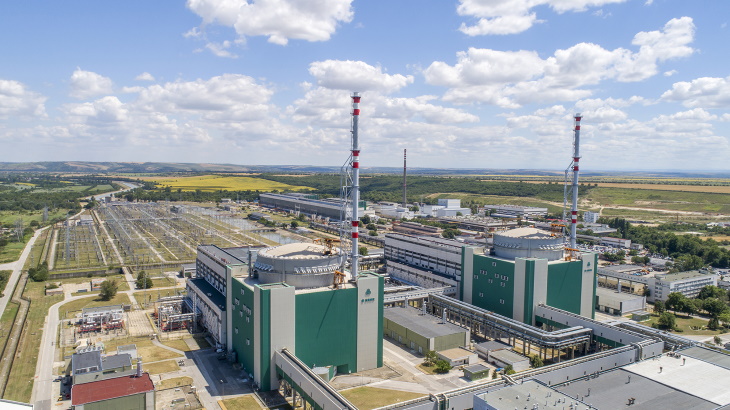
The Kozloduy nuclear power plant is in the northwest of Bulgaria on the Danube River and provides about 34% of the country’s electricity. It features two Russian-designed VVER-1000 units currently in operation, which have both been through refurbishment and life extension programmes to enable extension of operation from 30 to 60 years. Unit 5 was connected to the grid in 1987 and unit 6 in 1991.

Following the start of the Russia-Ukraine war, the European Union (EU) has imposed/extended sanctions on Russia. The Bulgarian Council of Ministers on Wednesday decided to grant a derogation from relevant parts of the EU’s Council Regulation 833/2014 to allow a public procurement contract to be concluded, and for it to last for the duration of supply contracts.

According to Bulgaria’s official BTA news agency: “A priority in the operation of Kozloduy NPP is maintaining the highest level of technical and nuclear safety, radiation protection, safe and healthy working conditions, as well as environmental protection. Regular deliveries of components and parts from the designers, constructors, and manufacturers of the equipment installed at the plant are a key guarantee of nuclear safety and uninterrupted electricity generation. As a large portion of the systems and equipment at the plant are of Russian origin, some contracts for the supply of goods related to the reliable and safe operation of Units 5 and 6 of Kozloduy NPP have been concluded, or need to be concluded, with Russian contractors.”

Kozloduy’s unit 6 was taken offline twice over the winter after issues said to be related to sourcing replacement parts from a Russian supplier.

Bulgaria has plans for two Westinghouse AP1000 units at Kozloduy. The aim is for the first AP1000 unit – unit 7 at Kozloduy – to be operational in 2035 and the second one – unit 8 – to be operational in 2037. The 2300 MWe capacity of the two new units would exceed the 1760 MWe capacity of the closed first four units. The Bulgarian government has also said that further units will be needed to replace units 5 and 6 by 2050.
   

  • Related Posts

    Construction starts at Saskatchewan uranium mine

    The groundbreaking ceremony comes after the company received the final regulatory approval for the project – described by NexGen as the largest development-stage uranium project in Canada – in March.…

    Nuclea Energy to acquire Moltex Energy technology portfolio

    Ontario-headquartered Nuclea is designing the Morpheus microreactor, a compact, transportable and factory-fabricated lead-cooled, graphite-moderated microreactor which is currently in the conceptual design stage. The Moltex asset acquisition would extend Nuclea’s…

    Have You Seen?

    Kazakhstan Accuses Big Oil of $10.7 Billion Corruption in Kashagan Oil Project

    • August 15, 2026
    Kazakhstan Accuses Big Oil of $10.7 Billion Corruption in Kashagan Oil Project

    Hormuz Tanker Traffic Slumps as U.S.-Iran Standoff Drags On

    • August 14, 2026
    Hormuz Tanker Traffic Slumps as U.S.-Iran Standoff Drags On

    Vance Says Cheap Oil and Gas Is Top U.S. Priority in Iran War

    • August 14, 2026
    Vance Says Cheap Oil and Gas Is Top U.S. Priority in Iran War

    Middle East Oil Tankers Are Going Dark for Longer

    • August 14, 2026
    Middle East Oil Tankers Are Going Dark for Longer

    Drone Strike Sparks Blaze at Key Russian Oil and Fuel Terminal

    • August 14, 2026
    Drone Strike Sparks Blaze at Key Russian Oil and Fuel Terminal

    Hormuz Crisis Pushes Asian Refiners Toward U.S. Oil

    • August 14, 2026
    Hormuz Crisis Pushes Asian Refiners Toward U.S. Oil

    India’s Coal Demand Set to Hit 1.6 Billion Tons by 2030

    • August 14, 2026
    India’s Coal Demand Set to Hit 1.6 Billion Tons by 2030

    Holcim UAE starts cement carbon capture pilot project

    • August 14, 2026
    Holcim UAE starts cement carbon capture pilot project

    Qatar Ras Laffan train five ‘goes offline’

    • August 14, 2026
    Qatar Ras Laffan train five ‘goes offline’

    Vietnam’s Bac Ninh semiconductor investment hits $2.7bn

    • August 14, 2026
    Vietnam’s Bac Ninh semiconductor investment hits $2.7bn