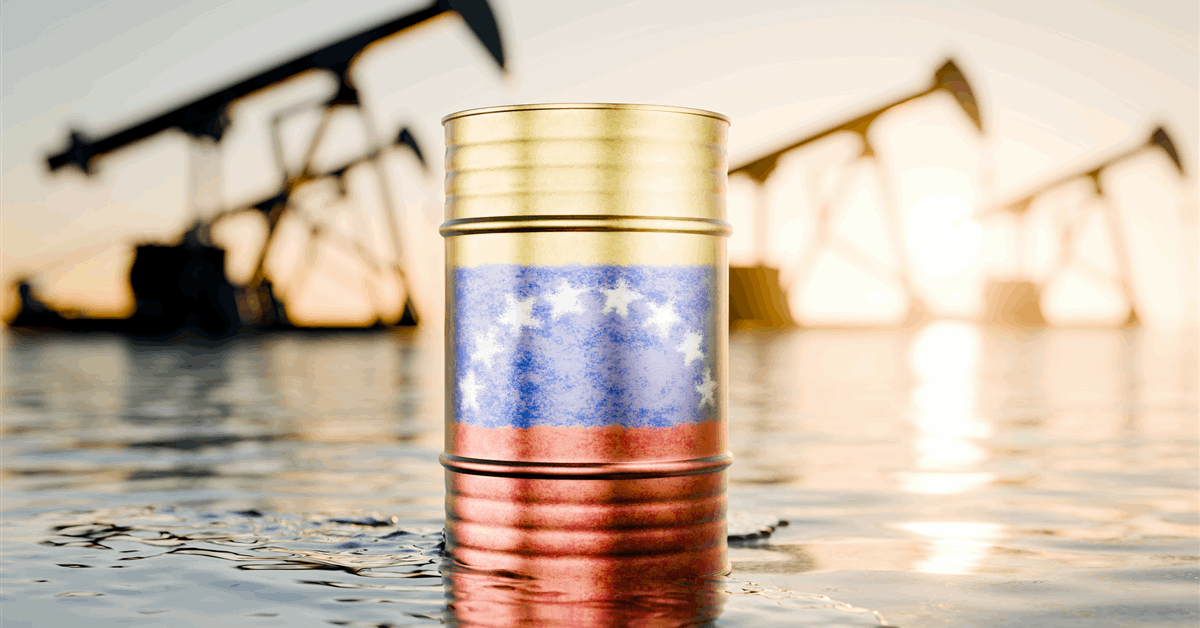
In a statement posted on his Truth Social page late Friday, U.S. President Donald Trump announced that the U.S. had “just entered into an Agreement with the Country of Venezuela on … THE BIGGEST OIL DEAL IN WORLD HISTORY!”.
“At my direction, Secretary of State Marco Rubio, and Secretary of War Pete Hegseth, working closely with Highly Respected Interim President of Venezuela, Delcy Rodriguez, and, through a partnership with private business, have secured majority U.S. control of more than 65 BILLION BARRELS of proven Oil Reserves in Venezuela, at no cost to the American Taxpayer,” Trump said in the statement.
“This Historic Transaction MORE THAN DOUBLES American Oil Reserves, greatly increases our Oil Supply, and will substantially lower Gas Prices for all Americans, long into the future, while helping to continue to set Venezuela on a course toward Tremendous Success and Great Prosperity,” he added.
“This Transaction will greatly strengthen the already growing relationship between Venezuela and the United States! Thank you for your attention to this groundbreaking matter,” he continued.
In a statement posted on her X page on Saturday, Delcy Rodriguez, Acting President of the Bolivarian Republic of Venezuela, announced a “historic agreement with the United States government”, which she said “will have a significant impact” on Venezuela’s “revival”.
“This initiative is the result of the strengthening of relations between Venezuela and the United States, and it will facilitate a significant flow of investment aimed at the recovery and reconstruction of strategic infrastructure for the development of our hydrocarbons industry,” Rodriguez stated.
“I extend my deepest gratitude to the President of the United States of America, Donald Trump, as well as to Secretary of State Marco Rubio and the U.S. government for their support in developing this agreement, which represents a historic milestone in bilateral relations between Venezuela and the United States,” Rodriguez continued.
Rodriguez highlighted in the statement that the agreement “will allow for a significant increase in oil production with the participation of private operators”.
“It calls for the development of 17 strategic fields, with a proven potential of 65 billion barrels of oil, an investment of more than $100 billion, and more than $209 billion in taxes for the State,” she added.
“These investments will contribute not only to the recovery and modernization of our industry, but also to our country’s economic growth, the energy security of our hemisphere, and greater balance in international markets,” Rodriguez noted.
“Our goal is to move toward consolidating our position as an energy-producing power, putting our immense reserves at the service of national development, job creation, increased income for our workers, and the well-being of our people,” Rodriguez went on to state.
“Venezuela is thus ushering in a new era of recovery, growth, production, security, and prosperity for our people,” the acting president concluded in the statement.
In a market analysis sent to Rigzone on Monday, which commented on the U.S.-Venezuela deal, Naeem Aslam, CIO at Zaye Capital Markets, noted that, “if Venezuelan production rises materially and more crude becomes available to the U.S. market, that could increase supply and reduce some of the pressure currently supporting oil prices”.
He added, however, that the near-term market was “reacting more strongly to immediate Hormuz risk than to future Venezuelan barrels that still require investment, infrastructure, and time before reaching the market”.
In crude market commentary sent to Rigzone today, Aaron Kildow, Crude Commodity Owner at Sparta Commodities, said “news of a long-term agreement between the U.S. and Venezuela to invest in and grow production should be welcome … for USGC complex refiners”.
Kildow warned, however, that the “exact timing of production increases in Venezuela is … a bit murky”.
“While the geology is rock solid (so to speak), billions of dollars still need to be spent on extraction and infrastructure for the greenfield development zones, not to mention bringing existing capacity up to international standards,” he added.
To contact the author, email