Takeaways by Bloomberg AI
- Trump administration officials urged US oil producers to boost output amid a global supply shock caused by the war in Iran.
- The administration is grappling with the effective closure of the Strait of Hormuz, which has yanked an estimated 16 million barrels per day of crude from the world market.
- Industry leaders emphasized the importance of permitting reform and recommended easing restrictions on flaring natural gas from wells as a way to boost oil production.
Trump administration officials urged US oil producers to boost output, driving home a message to the industry that’s become more urgent amid the war in Iran.
Get the Latest US Focused Energy News Delivered to You! It’s FREE:
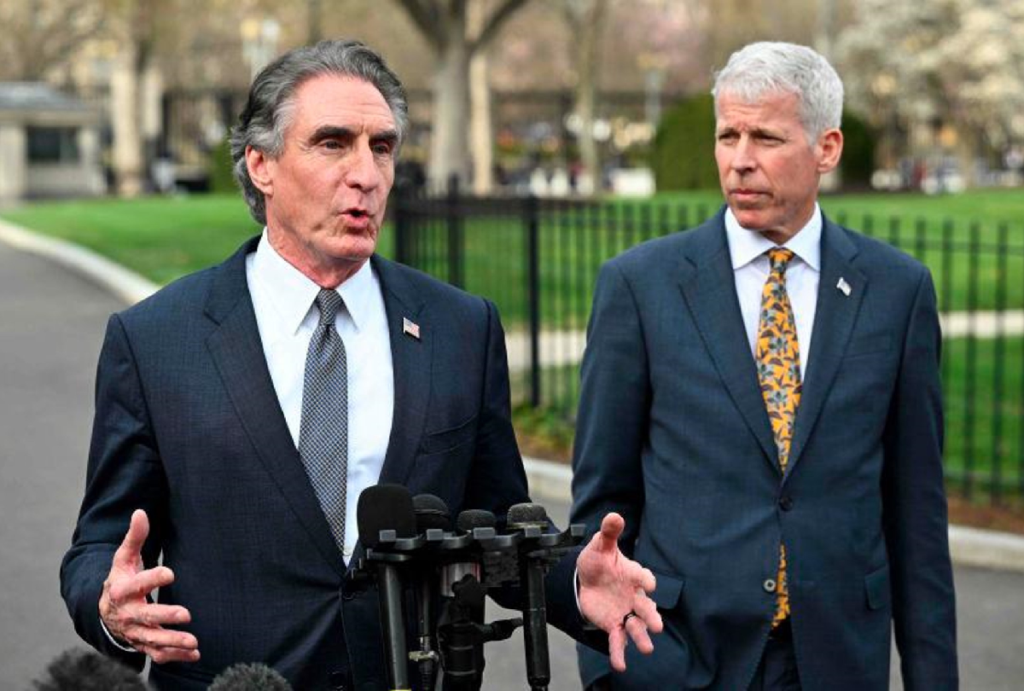
Interior Secretary Doug Burgum and Energy Secretary Chris Wright made their plea during a videoconference Thursday with roughly a dozen oil executives, including representatives of Exxon Mobil Corp., Chevron Corp. and Continental Resources Inc.
President Donald Trump’s team has for months pushed the industry to produce more oil. But now the administration is grappling with a global supply shock caused by the effective closure of the Strait of Hormuz, which normally carries roughly a fifth of the world’s oil and liquefied natural gas supplies.
Paralysis in the Strait, combined with damage to Gulf energy facilities, has yanked an estimated 16 million barrels per day of crude from the world market, sending oil and gasoline prices soaring. That, in turn, has created an acute political risk for Trump’s Republicans ahead of the November midterm elections.
Other companies represented in the meeting Thursday included Hilcorp Energy, Diamondback Energy Inc., Devon Energy Corp. and Occidental Petroleum Corp.
While futures contracts for global crude were at $98.30 Thursday, traders are bidding far higher than that for physical deliveries. Dated Brent, the world’s most important price for real-world oil barrels, reached a record high earlier this month before retreating.
Wright reiterated his assertion that the disruption will endure for weeks — not months. That’s in line with a refrain from other administration officials — including Trump — who have cast the price increases for oil and gasoline as a short-term blip.
“They’re not very high, if you look at what they were supposed to be, in order to get rid of a nuclear weapon, with the danger that entails,” Trump told reporters Thursday at the White House.
Details of the 40-minute meeting were shared by an administration official and people familiar with the matter who asked not to be named because the conversation was private. The virtual gathering was subdued, a person said.
US officials have argued the surge in crude will entice companies to increase production. But executives have been reticent to spend the current windfall on drilling new wells, especially as futures point to a steep decline in prices over the coming months.
Oil executives largely refrained from relaying those concerns during the call, according to the people. Some executives volunteered that they were boosting production.
“It was a great call,” Burgum said at a Semafor event later Thursday. “These guys are all leaning in because they’re getting a price signal that this is a time to invest.”
Wright and Burgum told executives they were thankful for increased US oil production, but stressed the opportunity to crank output up even further. The US has been hitting record highs and is on a great output trajectory, they said, before asking industry leaders what could be done in the short term to reach the next level.
Industry leaders emphasized the importance of permitting reform that could shrink the timetables for the development of energy projects — including new drilling — inside the US. Efforts to advance a sweeping permitting overhaul bill on Capitol Hill have stalled amid Democratic frustration over administration efforts to halt already authorized renewable energy projects.
Some of the industry officials recommended easing restrictions on flaring natural gas from wells as a way to boost oil production, according to one person familiar with the conversation. That could help bring on production from oil wells that don’t have infrastructure to carry associated gas to market.
Executives praised recent efforts by the administration to address prices and supply constraints tied to the war. That included a temporary of the Jones Act, which has allowed crude and refined fuel to be transported between US ports on foreign vessels, rather than American-built, -operated and -flagged ships.
Business leaders also emphasized opposition to any kind of ban on US crude exports. Administration officials have explicitly ruled out export curbs, and Wright and Burgum reiterated Thursday that there are no plans to implement those restrictions.
Administration officials also reaffirmed they would not seek a windfall profits tax, a person familiar with the matter said.
— With assistance from Ari Natter and Kevin Crowley
Share This:
More News Articles