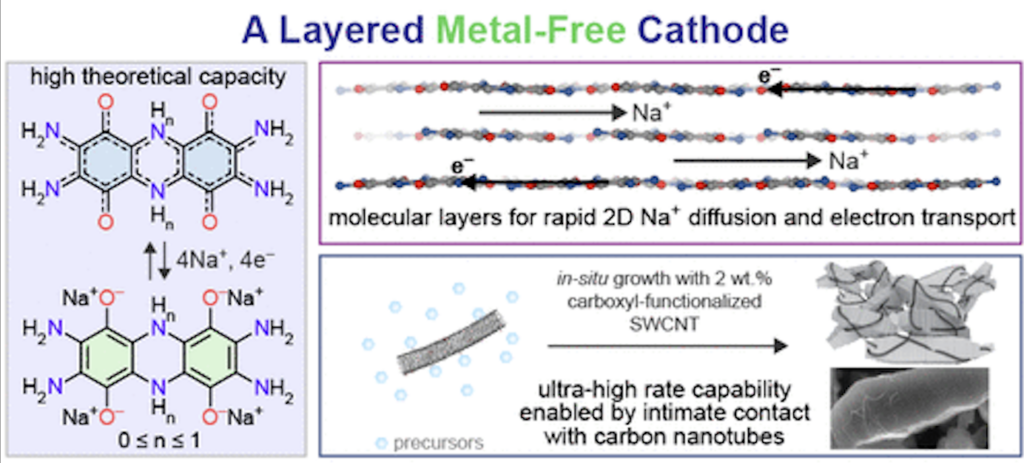
Princeton University’s Dincă Lab has made a breakthrough in battery technology by demonstrating a high-performance sodium-ion cathode, paving the way for an alternative to lithium-ion batteries. This innovation is particularly significant for the electric vehicle (EV) industry, which is facing increasing challenges related to lithium supply and cost. The research, led by scientists at Princeton’s Department of Chemistry, offers a potential solution to the growing demand for sustainable energy storage while reducing dependence on scarce and expensive lithium resources.
As the global transition to electric mobility accelerates, the demand for efficient and affordable batteries has surged. Lithium-ion batteries have long dominated the EV market due to their high energy density and fast-charging capabilities. However, lithium’s limited availability and rising extraction costs pose major challenges, leading researchers to explore alternative battery technologies. Sodium-ion batteries present a promising option, offering abundant raw materials and potentially lower production costs.
The latest study from the Dincă Lab highlights the development of a novel sodium-ion cathode with significantly improved performance metrics compared to previous designs. Sodium, which is far more abundant than lithium, has long been considered a viable candidate for battery technology, but its practical application in EVs has been hindered by lower energy densities and stability issues. The Princeton researchers have addressed these limitations by designing a new cathode material that enhances energy retention, longevity, and charge efficiency, making it a compelling option for electric vehicles.
According to the study, the newly developed cathode material exhibits higher conductivity and structural stability, making it a strong contender for next-generation sodium-ion batteries. This advancement could accelerate the adoption of sodium-ion technology in EVs, particularly for manufacturers looking to reduce costs and reliance on geopolitically sensitive lithium supplies.
Professor Mircea Dincă, who led the research team, emphasized the significance of the findings. He explained that their work demonstrates sodium-ion batteries can achieve high performance comparable to lithium-ion batteries. By improving the cathode design, many of the limitations that previously held back sodium-ion technology can be overcome. This is especially critical for EV applications, where cost-effective and sustainable energy storage solutions are in high demand. Furthermore, their research has potential for large-scale energy storage applications like data centers, power grids, and commercial-scale renewable energy systems, expanding its impact beyond electric vehicles.
The impact of this research extends beyond cost savings. Reducing reliance on lithium could alleviate environmental concerns associated with lithium mining, which often involves extensive water use and habitat destruction. Additionally, sodium-ion batteries could provide a more sustainable and geopolitically stable energy storage solution for electric vehicles, reducing supply chain vulnerabilities.
Industry experts have taken notice of this breakthrough, as sodium-ion technology continues to gain traction in the search for more sustainable and affordable battery solutions for EVs. With continued development and optimization, sodium-ion batteries could revolutionize the automotive industry by offering a cost-effective and widely available alternative to lithium-based batteries.
The Princeton University team plans to further refine their cathode design and explore ways to enhance the overall efficiency of sodium-ion batteries. Their research marks a crucial step forward in the pursuit of more accessible and environmentally friendly energy storage solutions for electric vehicles and beyond.