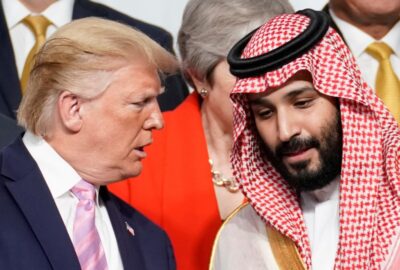
Events over the last 24 hours suggest power in the oil market has shifted to Washington from Riyadh – in part because of U.S. President Donald Trump and in part because of longer-term shifts.
Trump on Tuesday announced 25% tariffs on imports from Canada and Mexico, including 10% tariffs on Canadian energy, and also a doubling of duties on Chinese goods to 20%.
In response, the United States’ three biggest trading partners embarked on retaliatory measures and global markets went into retreat as the outlook for trade and economic activity darkened. U.S. stocks and bond yields slid, along with oil prices.
News the U.S. would pause military aid to Ukraine following last week’s angry clash with President Volodymyr Zelenskiy only added to the markets’ nervousness.
Speculation of a possible end to the war in Ukraine and the easing of U.S. sanctions on Russia increased the downward pressure on crude prices.
The headlines from Washington overshadowed what would once have been a blockbuster announcement for oil markets: the Organization of the Petroleum Exporting Countries and allied producing nations, or OPEC+, said they would move forward with the first output increase since 2022.
Starting in April, OPEC+ will over the following 18 months unwind 2.2 million bpd of production cuts.
The group said its decision stemmed from “healthy market fundamentals and the positive market outlook”.
That, however, is not reflected in the physical market. The International Energy Agency last month forecast that global supplies will exceed demand – roughly 103 million bpd – this year before any OPEC+ production additions.
So given that Trump has called on Saudi Arabia to lower oil prices, the OPEC+ decision smacks of political considerations. The move can also be interpreted as Saudi Arabia offering Trump room to impose new sanctions on arch-rival Iran, which exported nearly 2 million bpd last year.
SLOW DECLINE
The actions by Trump and OPEC – as well as the market reaction – highlight how much power dynamics in the energy market have shifted. But OPEC’s influence has been decreasing for over a decade.
It is true, OPEC+ members produce a combined 35 million bpd, giving them considerable market sway.
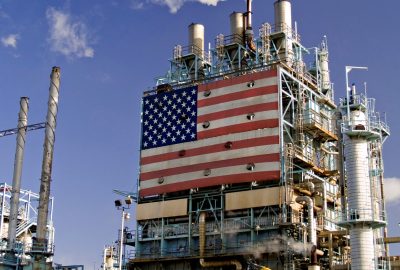
But supplies outside the group have surged, led by the United States, which is today the world’s biggest oil producer. The U.S. pumped 13.2 million bpd in 2024, exceeding Saudi Arabia’s production of around 9 million bpd.
Internally, too, the wider OPEC+ grouping has found it increasingly hard to maintain discipline as members, including Kazakhstan, Iraq, Nigeria and the United Arab Emirates, have increased production capacity.
Producers also face slower oil demand growth as electric vehicle sales have risen, internal combustion engines have become more efficient and the use of oil in the power and heating sectors has declined.
For OPEC’s de-facto leader Saudi Arabia, the weakening demand outlook is a worry.
Its national oil company Aramco on Tuesday declared a 30% drop in total dividends to $85.4 billion in 2025 and a 12% drop in net profit in 2024 from the previous year due to weaker oil prices, lower refining margins and higher financing costs.
Adding oil to a well-supplied market would only exacerbate this weakness, and pile pressure on the Kingdom’s finances that rely on oil revenue.
Given this confluence of factors – OPEC countries’ budgetary requirements, rising energy supplies outside the group and the prospect of waning oil demand – OPEC can no longer manage the market as effectively as it once did.
The OPEC+ cuts have shown the group can manage supply effectively when disciplined.
Now, a repeat of the 2014 battle for market share, when Saudi Arabia, as a very low cost producer, was able to flood the market with oil to suppress rising non-OPEC production, feels unthinkable.
Conversely, Washington’s pursuit of policies that run counter to OPEC’s interests has been made possible by the U.S.’s energy independence.
In sum, the Republican president is taking advantage of vulnerabilities that have been building for years, which means, no matter what happens to Trump’s protectionist agenda, the steady power shift in energy markets away from OPEC is likely to continue.
** The opinions expressed here are those of the author, a columnist for Reuters. **
Want to receive my column in your inbox every Thursday, along with additional energy insights and trending stories? Sign up for my Power Up newsletter here.
(Reporting by Ron Bousso; editing by Barbara Lewis)
Share This:
More News Articles