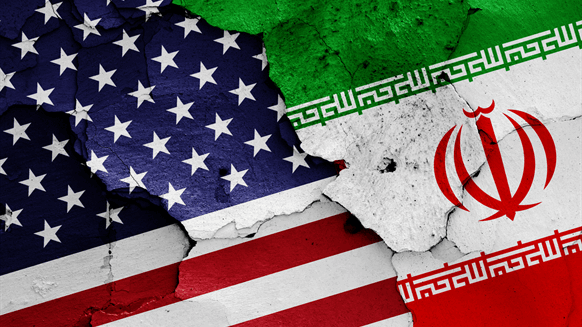
In an oil and gas report sent to Rigzone on Thursday by the Macquarie team, Macquarie strategists, including Vikas Dwivedi and Walt Chancellor, said they expect the renewed tension in the Middle East between the U.S. and Iran to be “relatively short-lived”.
The strategists outlined in the report that they expect this “because both countries are constrained by practical economic and political realities”.
“That said, selling into rallies does not present favorable risk-reward either; today’s [Wednesday] volume may suggest the beginning of a short-covering process,” they added.
The Macquarie strategists revealed in the report that their analysis “suggests the market’s fundamental oversupply is large enough to allow for plenty of downside participation once current tensions subside”.
“The U.S. is constrained by the risk that higher oil prices could return with fewer mitigation sources available as time goes on and the risk that Iran could materially damage ME oil infrastructure,” they said.
“Likewise, Iran has come through the negotiations with (arguably) a great deal. We would be surprised if they overplay a good hand and test Pres. Trump’s patience and restraint for minimal remaining gain,” they continued.
In the report, the Macquarie strategists highlighted that, prior to the recent skirmishes, inbound and outbound traffic through Hormuz had started to recover to pre-war levels.
“The 7-day MA of crude + condensate + clean products (gasoline, diesel, jet, naphtha) transiting the SoH had reached ~54 percent of the pre-war level, driving down the deficit to the pre-war level to only eight million barrels per day,” the strategists pointed out.
“Concurrently, MEG floating storage, which had reached 150 million barrels, has dropped below 10 million barrels, alongside a rapid increase in loadings inside the Strait of Hormuz,” they added.
“The 7-day MA of crude + condensates + CPP loadings inside the Strait picked up to 40 percent of the pre-war level, still down ~11 million barrels per day. This deficit is still being bridged by the mitigation/bypass routes during the war with the total Gulf countries at 65 percent of the pre-war level, ~8 million barrels per day down,” they continued.
“Gulf crude loadings, specifically, sit at ~68 percent of the pre-war value of ~18 million barrels per day. Notably, the rate of outbound traffic appears sustainable as inbound vessels into the Mideast Gulf have averaged approximately 10 million barrels per day of capacity since the signing off the MoU,” they went on to state.
Technical Talks
In a market analysis sent to Rigzone on Friday, Monte Safieddine, Head of Market Research at Capital.com, highlighted that oil prices had retreated today, “undoing Wednesday’s rally but still up over five percent so far this week”.
Safieddine outlined that prices “eased on a report Washington and Tehran will engage in ‘technical talks’ despite President Trump declaring the interim agreement over, later saying that Iran wants to make a deal and ‘I don’t know’ whether the two are going back to full conflict”.
Rigzone has contacted the White House and the Iranian Ministry of Foreign Affairs for comment on the Macquarie report Safieddine’s statement. At the time of writing, neither has responded to Rigzone.
The Next Challenge
In a report sent to Rigzone on Thursday by Natasha Kaneva, J.P. Morgan’s Head of Global Commodities Strategy, J.P. Morgan analysts, including Kaneva noted that Hormuz “remains primarily a crude story” but warned that “the next challenge for the market … may increasingly be a refining story”.
“The latest round of strikes between the U.S. and Iran has pushed Hormuz flows sharply lower again, reversing much of the recovery seen over recent weeks,” the analysts said in the report.
“Yet after months of disruptions, the market has become increasingly comfortable thinking about crude supply as a dynamic problem: barrels can disappear quickly, but they can also return relatively quickly,” they added.
The analysts warned that refining is considerably more uncertain.
“The question is no longer whether crude barrels will return, but how quickly the global refining system can process them,” the analysts stated in the report.
“Three major uncertainties stand out: the extent of damage to Middle Eastern refining infrastructure after months of conflict, the timing of a policy-driven recovery in Chinese refinery runs, and the pace at which Russia’s refining system recovers from repeated Ukrainian drone attacks,” they outlined.
To contact the author, email